
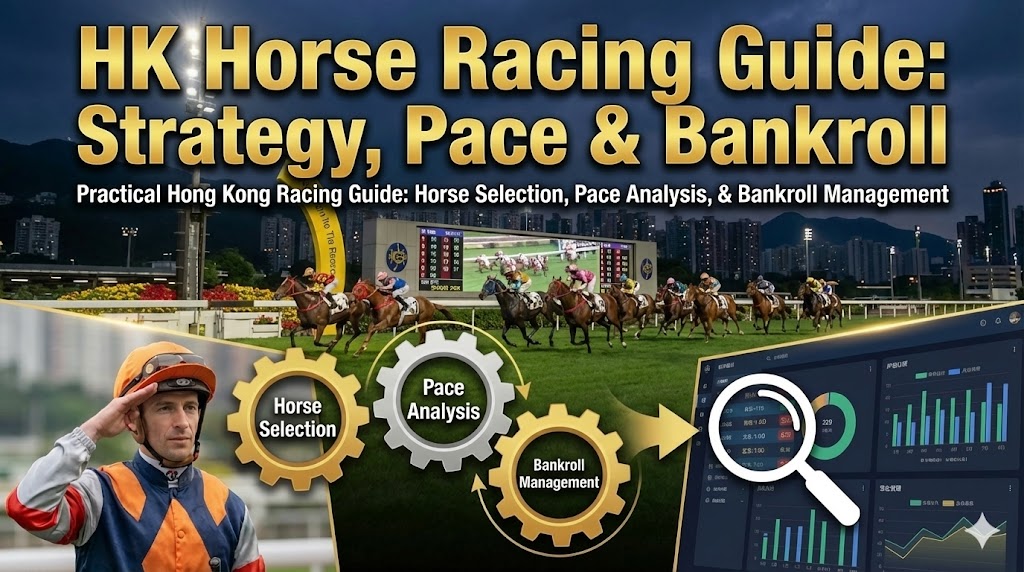
Without a clear strategy, it’s easy to fall into the trap of ‘random betting and losing.’ Professionals rely on systems, not luck. This guide covers horse selection, pace analysis, and bankroll management to help you build a profitable, long-term approach.
Pre-Race Homework: 4 Core Skills for High Win Rates
Among all racing skills, picking the horse is the fundamental first step. Remember, we are pursuing “Stability,” not “Longshots.”
1. Stability First: Avoid “Erratic Performers”
When picking a horse, the most important thing is not choosing one that exploded once, but one that performs consistently.
- Recent Form: Look for stable performance in the last 3-5 races (e.g., consistently finishing in the Top 4).
- Close Defeats: Even if it lost, it lost by a small margin without a disastrous defeat.
- Pro Tip: Picking stable horses is much safer than betting on longshots and is the foundation for building your bankroll.
2. Course & Distance (C&D) Record
Many guides mention “recent form,” but the truly practical skill is checking “Same Course and Distance.” A horse has high adaptability if:
- It has run on the same track (e.g., Happy Valley vs. Sha Tin).
- It has run the exact distance (e.g., 1200m vs. 1650m).
- It has achieved a Place or Win under these specific conditions.
3. Cross-Analysis of Draw vs. Distance
Draw analysis is essential but cannot be viewed in isolation; it must be combined with the race distance:
- Sprints (1000–1200m): Inner draws have a distinct advantage; jump speed is key.
- Middle Distance (1400–1600m): Draw matters, but the jockey’s positioning is more critical.
- Stayers (1800m+): Stamina and pace control matter more than the draw.
4. Jockey-Horse Synergy
Don’t just look at the jockey’s fame (like Purton or Moreira). Look at the “Chemistry”:
- Long-term Partners: Does this jockey ride this horse frequently?
- Familiarity: Does the jockey know the horse’s quirks on this track?
- The Signal: If a top jockey drops other popular horses to ride this specific one, it is a strong “Go” signal.
Advanced Analysis: Mastering Pace & Day-of-Race Conditions
1. Pace Analysis
This is often the deciding factor. If you misjudge the pace, even the best horse selection can lose.
- Fast Pace: Many front-runners fighting for the lead⮕ Favors Closers/Back-markers (Front-runners burn out).
- Slow Pace: No clear leader ⮕ Favors Front-runners/Rail Huggers (Closers won’t catch up in time).
2. Paddock Inspection (The “Sand Ring”)
Odds are a reference, but a horse’s body language doesn’t lie:
- Sweating: Is it moderate? Heavy sweating (white foam) can indicate nervousness or weakness.
- Temperament: Is the horse agitated or fighting the handler?
- Gait: Is it focused? Good mental focus often predicts stable performance.
3. Interpreting Odds Movements
- Steady Drop: Supported by “Smart Money.”
- Sharp Drop (Plunge/Brown Lamp): Check for insider information or heavy hitter intervention.
- Persistently High Odds: Usually “Also-rans” (fillers). Beginners should avoid these.
Betting Strategy & Bankroll Management
Of all the skills, money management is the key to whether you can survive in the long run.
1. Main Bet Selection: Abandon High Risk
It is recommended to focus on low-risk, high-hit-rate pools to accumulate wins.
- Recommended: Place, Place Quinella (Place Q).
- Not Recommended as Main: Win, Tierce, Quartet (High odds pools are for small entertainment bets only).
2. Primary vs. Secondary Allocation
Never use “Flat Betting” (betting the same amount on everything).
- 1 Main Horse: Most complete analysis, highest confidence ⮕ Heavier Stake.
- 1 Secondary Horse: Used for coverage/insurance⮕ Lighter Stake.
3. Iron Discipline: Stop-Loss & Take-Profit
- Capital Cap: Set a daily limit. A single race bet should be ≤ 10% of total funds.
- Emotional Control: Do not chase losses or get greedy with wins. Chasing immediately after a loss is why gamblers go broke.
- Quit While Ahead: Stop immediately once you reach your daily profit target.
FAQ: Must-Reads for Beginners
Q1: What are the most common mistakes beginners make?
A: Betting on longshots just because the payout is high, increasing stakes immediately to chase losses, betting on every race without doing homework, and treating high-risk pools (like Triple Trio) as their main strategy.
Q2: What should the standard workflow look like?
A: We recommend the following process:
- Select only 2-3 races with the highest confidence for the whole day.
- Use “Picking Skills” to identify Main and Secondary horses.
- Lock in Place or Place Q as your primary pools.
- Observe odds and Paddock status for final confirmation.
- Stop immediately upon reaching your target. Discipline is key.